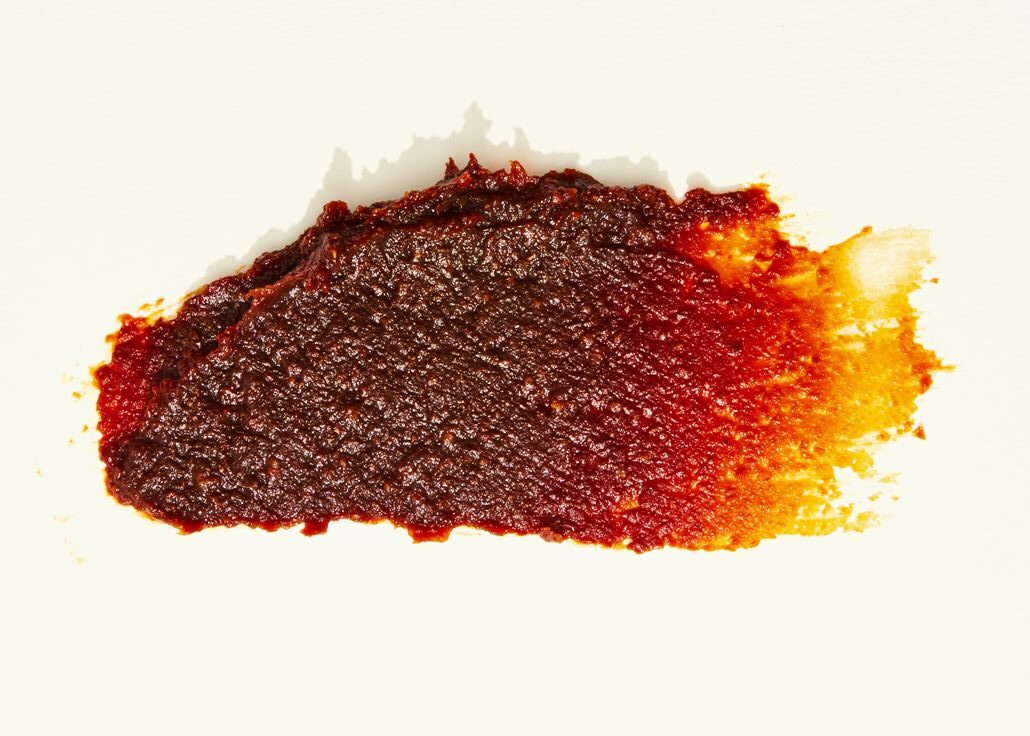
OBJECTIVE: To biochemically disassemble a carbonized carbohydrate structure (stale bread) into a shelf-stable, high-glutamate amino paste using fungal enzymatic hydrolysis.
YIELD: ~1kg Paste TIMELINE: 12 Weeks ENVIRONMENT: Anaerobic / Ambient Temperature (20°C – 28°C)
1. THE SUBSTRATES
- The Carbon Source:
- Item: Stale Sourdough Bread.
- Condition: Must be hard. Moisture content <10%.
- Quantity: 500g (Dry Weight).
- The Agent:
- Item: Dried Rice Koji (Aspergillus oryzae).
- Function: Protease and Amylase secretion.
- Quantity: 500g.
- The Control:
- Item: Non-Iodized Sea Salt.
- Function: Bacterial inhibition.
- Quantity: Variable (See Calculation).
- The Solvent:
- Item: Filtered Water.
- Quantity: Sufficient for hydration.
2. THE ALGORITHM
Phase 1: Carbonization
- PREHEAT thermal chamber (oven) to 200°C (400°F).
- SLICE bread into uniform 3cm cubes.
- ROAST until the structure passes “golden” and reaches “dark brown.”
Critical Check: Edges must be black (Carbon). This bitterness is required to balance the enzymatic sweetness later.
Phase 2: Hydration
- WEIGH the charred bread. Record as “Mass_Dry”
- SUBMERGE in filtered water for 60 minutes.
- STRAIN gently. Do not wring out.
- WEIGH the damp bread. Record as “Mass_Wet“
Tactile Check: The bread should feel like damp potting soil. It should yield to pressure but not drip water when squeezed.
Phase 3: Calculation
Fermentation requires precise salinity to prevent pathogenic rot. Do not estimate.
Formula:
Total Mass = “Mass_Wet” + “Mass_Koji“
Required Salt = Total Mass × 0.05
* The amount of koji required is 1 (Wet Bread) : 1 (Koji)
// MODULE: SALINITY_CALC v.1.0
0.0
g
Phase 4: Inoculation
- COMBINE Damp Bread, Koji, and Salt in a sterilized vessel.
- MINCE/MASH aggressively by hand or food processor.
- Texture Target: A chunky mortar, similar to wet sand.
- PACK into a sterilized glass jar or crock.
- Action: Press down firmly with a fist to remove all oxygen pockets. Oxygen is the enemy of this phase.
- SEAL: Sprinkle a layer of salt on the surface (the “Salt Cap”). Weigh down the surface. Cover with a breathable cloth or loose lid.
Phase 5: Incubation
STORE in a dark, ambient space (room temperature).
- T-Plus 2 Weeks: Check for surface mold. Scrape if necessary (white is fine; green/black is bad).
- T-Plus 4 Weeks: The “Tamari” (liquid) may begin to pool. This is a good sign.
- T-Plus 12 Weeks: HARVEST
- Sensory Check: The paste should be dark umber. Aroma should be malty, earthy, and reminiscent of stout beer or coffee.
3. DEPLOYMENT
The resulting paste is chemically potent. It contains the “Maillard Reaction” (roasted flavor) and “Proteolysis” (umami) in a single vehicle.
Suggested Applications:
- Emulsification: Whisk into butter for roasted vegetables.
- Base: Use in place of dark miso in soup stocks.
- Glaze: Brush onto proteins before grilling.